3 Questions To Ask Your Orthodontist About Braces
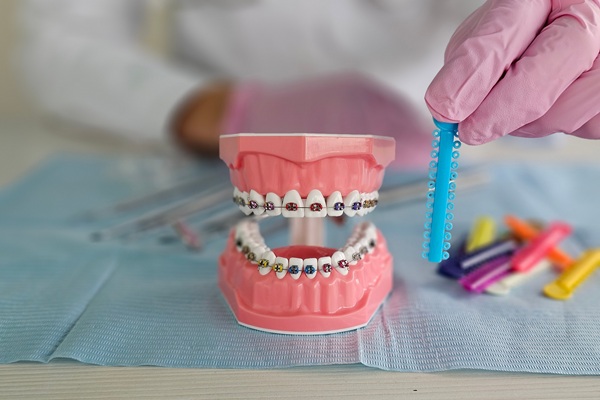
Braces can be a daunting prospect. However, our team will walk you through the entire process to ensure you comprehend and are comfortable with your treatment plan. The first step in achieving this is the initial consultation with our orthodontist, where you can ask as many questions as necessary. Below we have outlined three questions to prepare you for your consultation.
What to ask during your braces consultation
What are the different types of braces?
Contrary to popular belief, there is more than one type of braces. Our orthodontist will assess the patient’s individual needs during the consultation and recommend one of the following:
- Metal braces: These are the original braces that date back 100 years. However, their aesthetic has improved drastically over time. Also known as traditional braces, the brackets and wires are made of stainless steel. The metal brackets are applied to the front of the teeth, and the wires are connected through each bracket, applying a gentle force.
- Self-ligating braces: This involves a unique system of wires and brackets used in place of elastic ligatures. The self-ligating bracket has a built-in mechanism that automatically closes it when placed on the tooth. This eliminates the need for elastic ligatures previously used to hold the archwire in place.
- Lingual braces: These consist of metal or plastic wire and brackets bonded to each tooth’s backside. In some cases, the orthodontist may use rubber bands for added retention.
- Ceramic braces: Also known as invisible or clear braces, the brackets and wires are made from colorless and transparent materials, blending in with the patient’s gums and teeth. Additionally, they are applied the same way as metal braces. They are also designed to work with the patient’s saliva to keep them clean while adjusting their smile.
How long do braces take?
Treatment duration varies. It depends on the type of braces and the severity of the patient’s bite or malocclusion. In some cases, patients only need to wear their braces for six months, while others may need them for over two years. Additionally, if a patient responds quickly to treatment and follows all the orthodontist’s recommendations for their care and lifestyle changes, they may be able to shorten their treatment time.
How will my life change with braces?
The main lifestyle changes will come from food choices and adjustment appointments. No matter the type of braces a patient receives, they should avoid the following types of food:
- Uncut hard foods (i.e., apples, carrots, celery, raw broccoli, popcorn)
- Chewy foods (i.e., candy, gum, caramel)
- Tough meats (i.e., dried meats, tough steaks)
After determining the braces type the patient will receive, our orthodontist will provide a more detailed list of foods to consume and avoid.
The patient must also schedule several visits to our office throughout their treatment. During each visit, the orthodontist will check for any problems, fix broken brackets or wires, monitor alignment changes, and tighten the braces as needed. Our team will also remove any signs of plaque or tartar around the braces to ensure they function properly.
Schedule your consultation today
We hope this article has helped prepare you for your consultation. If you have any additional questions about braces and treatment, we encourage you to have them ready for your appointment. Write them down, if necessary. Our team is here to help guide you or your teen from start to finish.
Request an appointment here: https://www.starkidsdental.com or call Star Kids Dental & Orthodontics at (818) 483-9064 for an appointment in our Burbank office.
Check out what others are saying about our services on Yelp: Braces in Burbank, CA.
Recent Posts
Braces for teens are one of the most common orthodontic treatments offered today. As children grow into their teen years, they often need help correcting crooked teeth or bite problems. Choosing the right kind of braces can help improve not only a teen’s smile but also their confidence.Many teens need braces to fix problems like…
Pediatric dental care keeps children's smiles healthy as they grow up. Although baby teeth fall out, they play an important role in oral development. They hold space for adult teeth and, in the meantime, allow the child to eat and smile comfortably and confidently. A pediatric dentist can support your child's oral health by maintaining…
Children have a greater chance of developing cavities than adults. If the decay is severe, a pediatric dentist may suggest a stainless steel crown to protect the affected baby tooth. Without this treatment, total tooth loss could occur. It may not seem necessary to go to such lengths to preserve a baby tooth, but dental…
A pediatric dentist can restore comfort and function to a child’s tooth that is affected by dental trauma or decay. Often, baby root canals can preserve the natural tooth until it is ready to fall out on its own. A tooth extraction is, however, a better choice if the tooth is damaged beyond repair. A…